
Pterygium
What is a Pterygium?
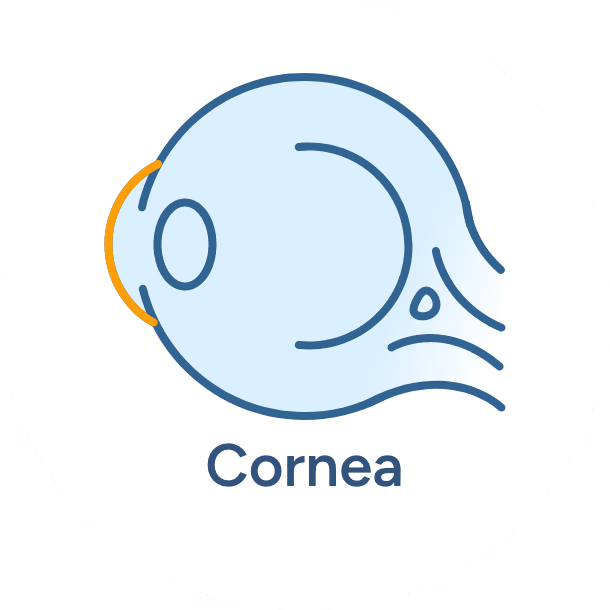
Pterygium is a growth of the normally thin clear membrane of the eyeball (conjunctiva) onto the cornea (the normally transparent front window of the eye). It tends to grow slowly but can affect vision by causing astigmatism and opacification of the cornea.
Risk Factors
Exposure to sunlight, particularly from the side, seems to be the main cause of pterygium. It typically occurs after 30 years of age, in men, in surfers or those who have had an outdoor occupation.
Symptoms
Pterygium may cause discomfort, dry eye, red eye, blurred vision and concerns of cosmesis. As it progresses, it may lead to progressive changes in glasses prescription.
Diagnosis
Pterygium can be diagnosed by your optometrist or ophthalmologist, and the optical effects on the corneal surface can be analysed by corneal topography.
Occasionally, skin cancers on the surface of the eyeball can be confused with (or arise from) a pterygium. A recent history of rapid growth of the lesion on the eye is particularly suspicious. Your ophthalmologist can usually differentiate between these, but occasionally surgery is required to be certain.
Natural History
Pterygium tends to grow only slowly, and most cases of pterygium can be managed without surgery.
If not treated in a timely manner, pterygium growth may lead to permanent scarring of the cornea, which may compromise the vision permanently, despite surgery.
Treatment
Wrap-around sunglasses and a wide-brimmed hat can help to prevent further growth of an existing pterygium.
Glasses can correct mild astigmatism caused by pterygium, but monitoring by an ophthalmologist is still recommended to ensure that there is no vision-threatening growth of the lesion.
Dry eye, red eye or symptoms of discomfort can sometimes be treated with various eyedrops, and it is reasonable to try preservative-free lubricating eyedrops every 1-2 hours for 2-3 days initially.
Ultimately, only surgery can remove or reduce the size of an existing pterygium. The operation is performed painlessly in hospital and involves removing the pterygium with surgical instruments, and using a small patch of conjunctiva from elsewhere on the surface of the eye to cover the area where the pterygium was (this part is called a “conjunctival autograft”). This autograft can be stitched or glued into place. There is some pain for a few days after the operation until healing occurs. While you can usually return to work and driving within 1-2 weeks, it can take 1-2 months for the eye to recover completely.
Eye conditions we treat
Explore the range of eye conditions we can help manage and treat for better vision and eye health.