
Central Serous Chorioretinopathy (CSC)
What is Central Serous Chorioretinopathy (CSC)?
Central Serous Chorioretinopathy “CSC” (or “CSR” or “CSCR”) is a condition where fluid from the choroid leaks underneath the retina. CSC usually becomes symptomatic when there is fluid under the macula. CSC is not the same condition as macular degeneration.
Who is at risk of Central Serous Chorioretinopathy (CSC)?
CSC most commonly affects young to middle-aged males. However, it can affect patients of any age and gender.
What some risk factors for Central Serous Chorioretinopathy (CSC)?
- Corticosteroid medications are known to worsen CSC. This includes any formulation, including oral tablets, creams, injections, inhalers and nasal sprays.
- Psychological stress
- Sleep disturbance including a chronic lack of sleep, or reduced quality sleep and is seen in people who do shift work or have sleep apnoea.
- Pregnancy
- Hypertension (high blood pressure)
What are the symptoms of Central Serous Chorioretinopathy (CSC)?
Common symptoms include blurred vision, distortion (bent or crooked vision) and micropsia (objects looking smaller than they really are). In many cases there is a circular brownish tinge in the centre of the vision. It may cause difficulty with reading or judging distances. It can affect one or both eyes.
How is Central Serous Chorioretinopathy (CSC) diagnosed?
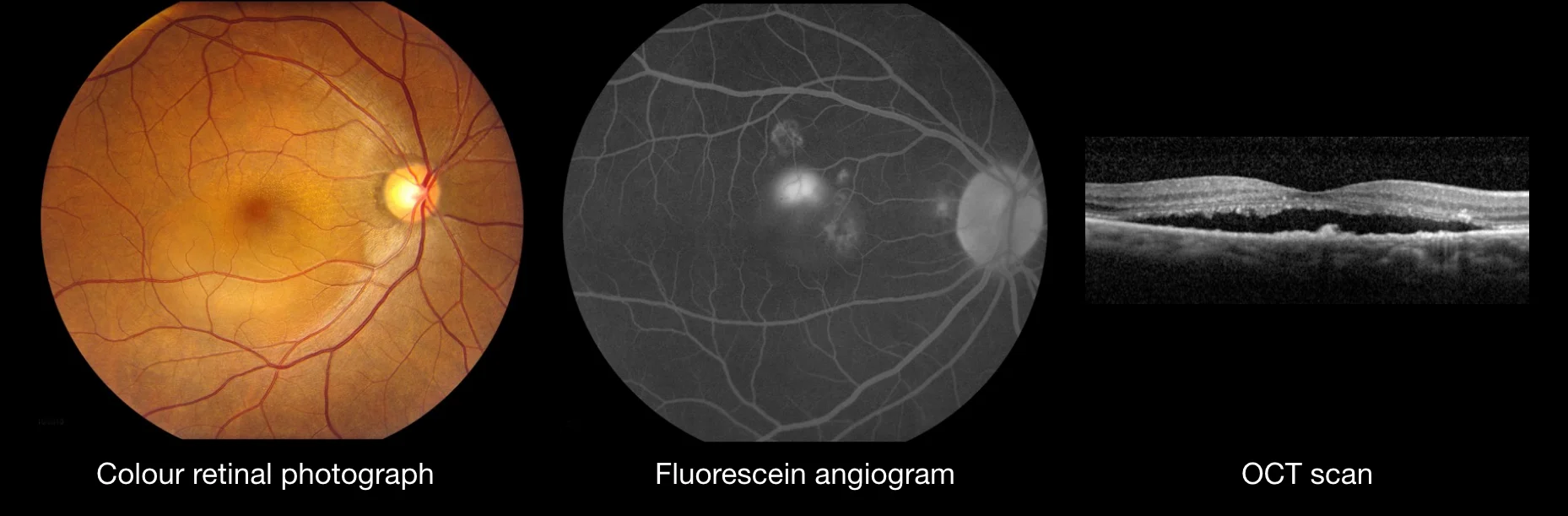
Central serous chorioretinopathy (CSC) is diagnosed after a review of your history, retinal examination and further tests. These tests may include optical coherence tomography (OCT), fundus photography including autofluorescence, and dye-based angiography using fluorescein and/or indocyanine dye.
What is the natural history of CSC?
In most cases, a first episode of CSC will go away by itself after a period of weeks to months and this is referred to Acute Central Serous Chorioretinopathy (CSC). However, in some cases CSC can last for longer than this or can recur, in which case it is referred to as Chronic or Recurrent CSC.
What treatment is required for CSC?
Usually no treatment is required for Acute CSC. Treatment for CSC may be needed if there has been no improvement following a period of months (Chronic CSC), or if the condition has recurred (Recurrent CSC).
Treatments include:
- Argon laser photocoagulation (“thermal” or “hot” laser)
Thermal laser treatment may be indicated if a small leakage point can be identified on the fluorescein angiogram. The laser power is low, so complications are rare.
- Photodynamic therapy (PDT, “cold” laser)
PDT is a special laser that can be used to treat CSC. A dye (verteporfin, Visudyne®) is injected into an arm vein, then the laser applied after this.
What can be expected following treatment?
It can take several weeks to months before the final outcome of treatment is known. Further treatment may be required at that time. Even if the fluid under the retina goes away following treatment, the quality of vision may not return to “normal”.
Eye conditions we treat
Explore the range of eye conditions we can help manage and treat for better vision and eye health.